Quote

23 Mar

“It is not easy to write in a journal what interests us at any time, because to write about it is not what interests us.”

Henry David Thoreau

Big Party Coming Up In Bogotá

19 Mar

For the past week I’ve been furiously trying to organise a party in Bogotá to celebrate the launch of the Sounds and Colours Colombia book. Finally everything has been confirmed and the line-up is looking pretty damn good.

There will be live music from both Andrés Gualdrón Y Los Animales Blancos (experimental pop) and Carmin Duo (folkloric sounds from the Caribbean coast), as well as La Blanquita Farm DJing what he calls “exquisite tropical tunes” all night. In addition, I’ll obviously be seeling a few copies of the Colombia book. I think it should be an interesting one.

If anyone reading this happens to be in Bogotá on Saturday 23rd March they should definitely come along. You can find more details on the Facebook event here: facebook.com/events/576888175662428

Unwrapping The Economic Mystery of Venezuela

16 Mar

When it comes to finances Venezuela is the one country where it is hugely advisable to do some research. Recent devaluations of the Bolivar, constant inflation which ranks by far the highest in Latin America and a black market for dollars makes it one of the most complex places to work out how to get the best value.

The best thing you can do is to bring lots of foreign currency with you, either Colombian Pesos to change when you’re coming through the border or dollars to exchange once you’re in the country. Obviously, you may worry whether it’s wise to bring so much money with you into Venezuela but if you can hide it in enough places in your bag and on your person then it’s worth the gamble. I would obviously not recommend keeping all of your money in one place as the amount of stop-searches (especially if you’re travelling by bus as seemingly every state will want to search your bags when you enter) that will happen to you in Venezuela is huge and even if the police/military are good people it will save you a lot of stress if you know that it’s not TOO easy to access all of your money.

I entered Venezuela with the equivalent of a pocket full of change. This meant that I had to withdraw all my money from the cash machines, at the current exchange rate of £1 to 9.5 Bolivares (Bs.F.). The maximum amount that showed up for quick withdrawals was Bs.F. 600 so I would normally take out the equivalent of £60 at a time, an amount that would last me a day or so (accommodation is not cheap).

However, when I entered the country I had 150,000 Colombian Pesos and changed those for 1,500 Bolivares. 150,000 Colombian Pesos is the equivalent of £50 and so for the equivalent of £50 I got an amount of Bolivares that would have cost me £157 to withdraw from the bank! That is some crazy exchange rate!

On my last couple of days I stayed in Maracaíbo where I got a bed for $30 per night. As well as offering a price in dollars the guesthouse offered a price in Bolivares of Bs.F. 400, which amounts to just over $60 using the current exchange rate. So, for paying in dollars I got half the price of if I had paid in Bolivares.

When I spoke to a couple of friends in Maracaíbo they told me that both the dollars and the Bolivares prices were both ridiculously high. They told me that the current price of a dollar in Venezuela is Bs.F. 21 to $1, which meant that by paying in dollars I was actually paying the equivalent of Bs.F 630 per night, around 50% higher than the normal price in Bolivares. Confused? So am I. What it basically means is if I bought the dollars in Venezuela (not a very good idea) then I should have paid in Bolivares, but if I had brought the dollars from another country then I should pay in dollars. Even then I shouldn’t have paid in dollars as if I had got them converted first using the crazy exchange rate in Venezuela I would have got far more for my money.

The lesson I learnt is essentially not to trust the cash machines or pay for anything in dollars (as you’re better off changing them using the ludicrously high black market rates first). Next time I come to Venezuela (presuming there is a next time) I will arrive with a stack of Colombian Pesos and dollars and get them all changed on the border before hiding them in pockets, the many compartments of my rucksack, between books and in CD cases. Even if I lose a few notes on the way it’s well worth it for the potential of tripling (if you have Colombian Pesos) or quadrupling (if you have dollars) your currency.

It’s a situation that the Government has not turned a blind eye to, and the reason for the recent devaluation was partly to stop this black market. You can read the latest update on the situation here.

In Caracas: Mourning The Death Of Hugo Chavez

15 Mar

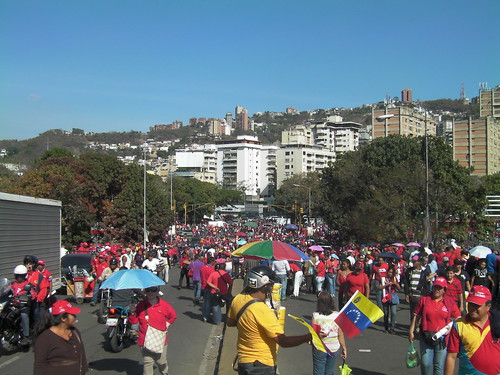
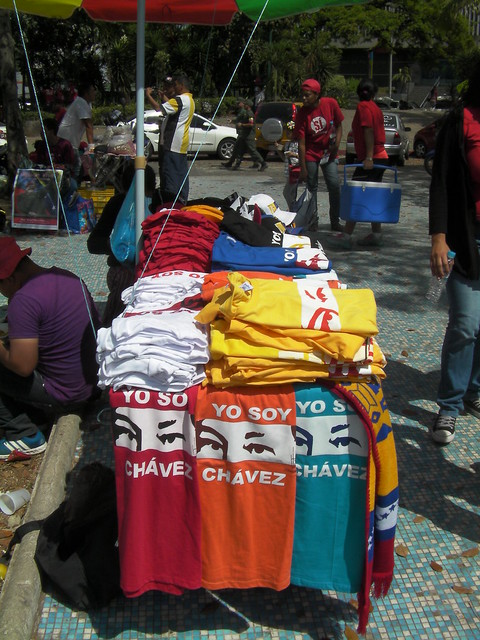
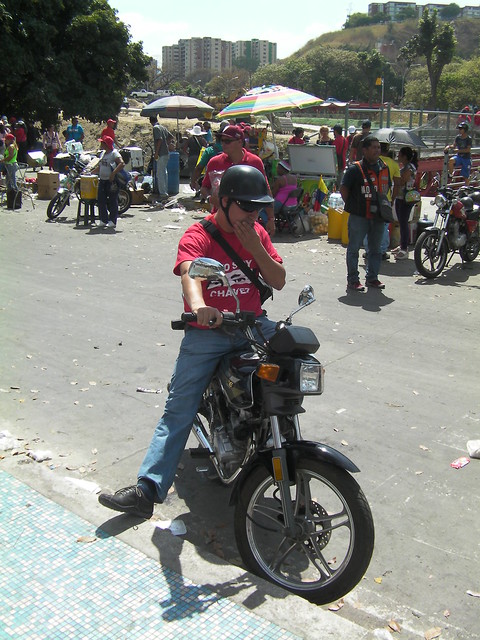
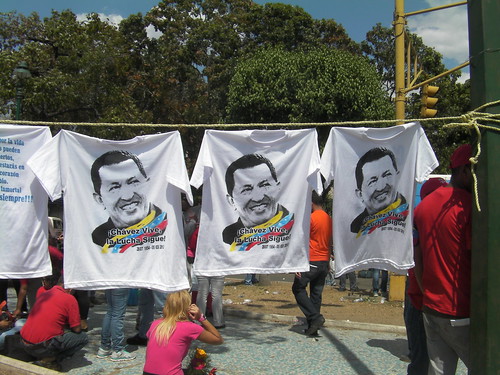
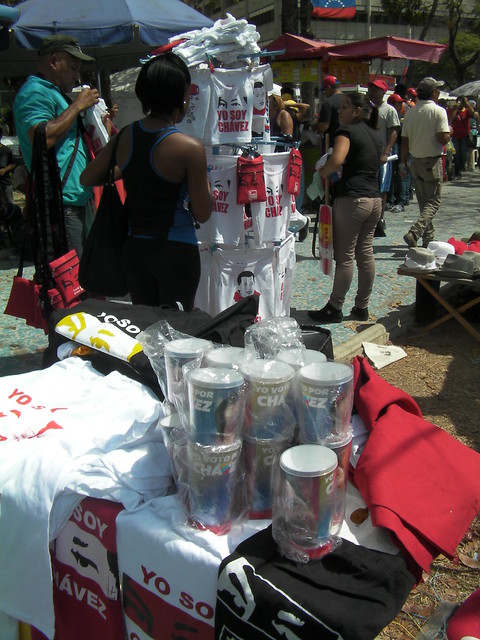
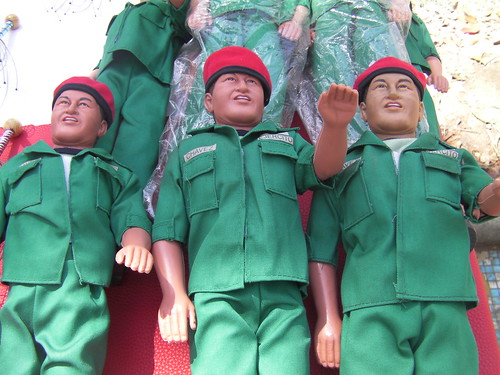
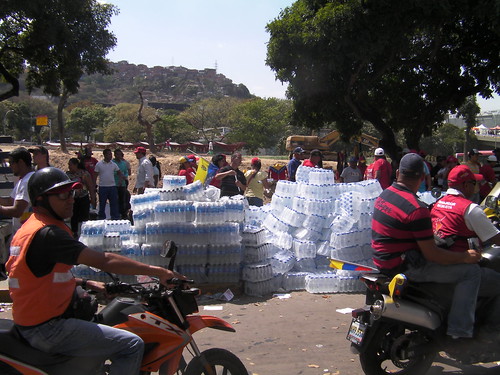
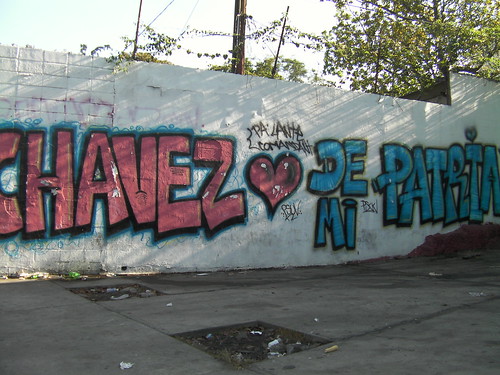
These photos were all taken around Fuerte Tiuna, a huge park and monument near the Banderas bus station in Caracas. This is where the Military Academy is based, the location where Hugo Chavez’s body was in display following his passing on Tuesday 5th March. His coffin arrived at the academy on Wednesday, followed by a parade of people which put Caracas to a standstill. In the first few days of his coffin being on display over 2 million Venezuelans arrived to see their former President, with a queue that has been estimated at 7km long. In total, his body was on display for 10 days before being moved to the Military Museum on the evening of Friday 15th March.

The quantity of Chavez memorabilia is quite incredible…


Free water, oranges and juice were handed out to the people in the queue.

Colombia to Venezuela: A Popular Route

6 Mar

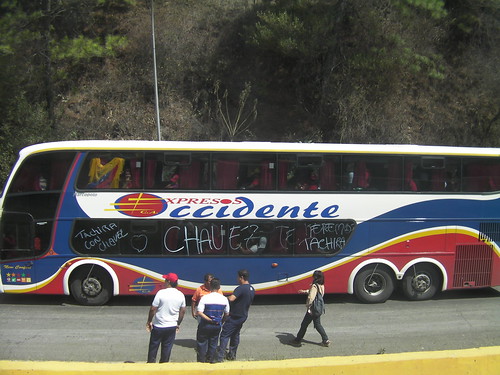
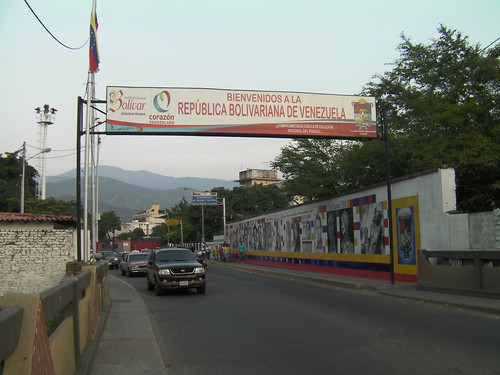
I met Waes on a bus going from the Colombian border to San Cristobal, a smallish Venezuelan town that acts as a gateway into the country. He moved here with his family quite a few years ago as he couldn’t pay for his mother’s medical bills in Colombia. In Venezuela even special treatment is much cheaper. He doesn’t agree with everything that Chavez has done – such as appropriation – but he feels he has undoubtedly done more good than bad. It’s for certain that he wouldn’t be able to dream about owning his own import/export business if he had had to pay for his mother’s treatment.

Arriving In Venezuela

6 Mar

Leaving Colombia

5 Mar

My journey was so quickly planned that once I got to the bus station I couldn’t even remember the name of the place I was heading.

It’s name – once I remembered – was Cucuta, the most popular border stop between Colombia and Venezuela. Despite this particular recognition it’s also rarely used by travellers. An incident in which two elderly Germans were kidnapped by the terrorist group ELN in November last year has put the border crossing on a blacklist for many foreign offices. Quite why two elderly foreigners were walking around a hill in the middle of nowhere is still unknown [supposedly they will be set free in March 2013 so we can find out why then] but it has given the border a reputation.

The plan once I got to Cucuta was to take the colectivo across the border to San Cristobal in Venezuela and find out if there was any planes or buses to Caracas. Unfortunately trying to book any of these things online is a problem as it’s impossible to book a flight with less than 48 hours notice and the bus company websites are simple to say the least.

Quote

18 Feb

“I prefer the saddle to the street car, and the star-sprinkled sky to the roof, the obscure and difficult leading into the unknown… this has been a full, rich year. I have left no strange or delightful thing undone I wanted to do.”

Everett Ruess

Pre-Carnival

30 Jan

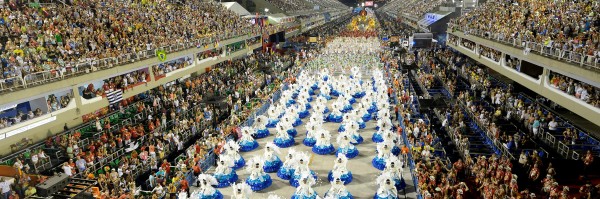
It’s two weeks before Carnival starts in Barranquilla and already the city is buzzing. Surely only Christmas can rival carnival for the way it takes over an entire city. On every house there are masks hanging on the walls, coloured paper decorations strewn across the exteriors, cumbiamberos – complete with straw hats and red neckerchiefs – propped up outside. Every stereo in the city is turned up to full volume, a mixture of hard carnival-ready cumbias (from the likes of Alfredo Gutierrez and Anibal Velasquez) and Joe Arroyo’s legendary salsa pipes pounding from the speakers. Every cultural institution (of which there are many) has switched to carnival fever. If you want to go to to a museum and see something un-carnival-related you’re out of luck. Every event is adorned with the word “carnaval”! The city has only one agenda, this is holiday season, time for the big verbenas, for the fiestas, to revel in the musical offerings that Barranquilla has to give.

For a good article on what Colombia carnival is all about check out this offering from Gina Vergel: El Carnaval de Curramba: Barranquilla Carnival

Idle Chit Chat

25 Jan

“We took them down. All the leaders, all their families. We took them down. Now, there’s just one leader left. We know where he is. He’s in the West now in the mountains. We assassinated his family, one by one we took them all down. He has no-one now. That’s why he’s trying to arrange a peace deal… But, I’m tired of helping other countries. I don’t know why we have to stick our nose in, solve other countries problems. It was the same in Afghanistan. They’re crazy there. There was this one guy, he had two RPGs, AK-47s, assault rifles. We took him down. Our entire unit swarmed in, assassinated 15 or 16 of them. They didn’t stand a chance. If you’re gonna pull that kind of shit on us then we’re gonna take you down… But, I don’t like America. I don’t want to go back there, it’s grimy. The people are grimy. When I retire maybe I’m gonna come and live in Colombia.”

Small talk with US army members can be a little intense.